

In the world of modern science, few discoveries have generated as much excitement—or as many questions—as CRISPR. Over the past decade, this powerful gene-editing tool has transformed the field of genetics, offering possibilities that once seemed like science fiction. From curing genetic diseases to improving crops and even exploring new frontiers in cancer treatment, CRISPR has the potential to reshape medicine and biology as we know it.
What Is CRISPR?
CRISPR (short for Clustered Regularly Interspaced Short Palindromic Repeats) is a naturally occurring system first discovered in bacteria. In nature, it acts as part of a bacterial defense mechanism. When viruses attack bacteria, the bacteria can "remember" bits of the virus's DNA and store it in their own genetic code. If the virus returns, the bacteria use CRISPR along with an enzyme called Cas9 to cut the viral DNA and neutralize the threat.
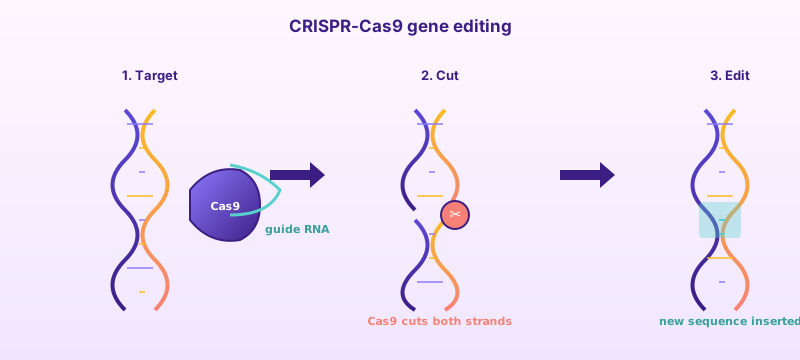
Scientists realized they could adapt this natural system to edit genes in other organisms—including humans—with remarkable precision. Essentially, CRISPR works like molecular scissors, guided by a customizable piece of RNA that directs the Cas9 enzyme to a specific spot in the DNA. Once there, Cas9 makes a cut, allowing scientists to delete, insert, or replace genetic material. If you want a refresher on what DNA actually is before reading further, our Top 10 Fascinating Facts About Human DNA is a quick primer on the molecule CRISPR cuts.
Transforming Medicine: Real-World Applications
1. Treating Genetic Diseases
CRISPR holds tremendous promise for treating conditions caused by mutations in a single gene, such as sickle cell anemia, cystic fibrosis, and muscular dystrophy. By correcting the faulty gene, doctors may be able to treat or even cure these diseases at their root. In fact, clinical trials are already underway, and some patients with sickle cell disease have shown remarkable improvements.
2. Cancer Research and Immunotherapy
Scientists are exploring ways to use CRISPR to modify immune cells so they can better recognize and attack tumors. This could make cancer treatments more targeted and effective, reducing the need for aggressive therapies with harsh side effects.
3. Preventing Inherited Disorders
In theory, CRISPR could be used to correct genetic mutations in embryos before birth, preventing certain inherited disorders entirely. This possibility has sparked intense ethical debates — debates we cover in depth in Genetic Engineering: Ethical Dilemmas and Innovations — but it also represents one of the most profound medical frontiers.
4. Fighting Infectious Diseases
Researchers are investigating how CRISPR could be used to combat viruses, including HIV. By editing viral DNA out of infected cells, it may one day be possible to eradicate chronic infections that currently have no cure. For context on how viruses operate and why they're so hard to defeat with conventional medicine, see Understanding Viruses: From the Common Cold to Pandemics.
Beyond Medicine: Wider Implications
CRISPR's impact extends far beyond healthcare. In agriculture, it's being used to create crops that are more resistant to drought, pests, and disease. Unlike traditional genetically modified organisms (GMOs), CRISPR allows for precise, targeted changes without introducing foreign DNA—potentially making these crops more acceptable to the public.
In conservation, scientists are exploring how CRISPR might help protect endangered species or control invasive populations that threaten ecosystems. For example, gene drives could be used to reduce the spread of malaria by altering mosquito populations.
CRISPR has already made history, earning its discoverers the 2020 Nobel Prize in Chemistry. Yet, the technology is still in its early stages. Over the next decade, we're likely to see major advances—safer editing tools, new medical breakthroughs, and perhaps even therapies that were unimaginable a generation ago.
But CRISPR is more than a scientific tool. It represents a turning point—a moment where humanity gained the ability to rewrite the code of life itself. How we choose to use that power will shape not only the future of medicine but the future of our species.